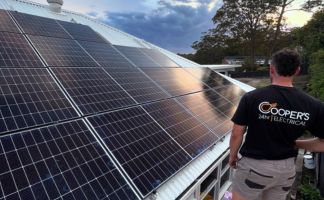
Your solar panels are still making electricity, so how bad can this warning be on your inverter? It may sound logical to think that way, but just because your system is still making electricity doesn’t necessarily mean that everything is working fine.
An inverter can show a warning message or an error even when your system is still making some electricity. Your problem may be temporary, partial or decrease performance without stopping the system completely. That’s why scheduling solar service in Newcastle might be necessary if your inverter shows a strange warning message time after time. Instead of guessing about your system status by yourself, it makes sense to know what this message means.
A total failure in the inverter is easy to identify but when the issue is partial or sporadic, it is more difficult to detect.
The system may continue generating power but generating a little less than expected. The error may occur during some times of the day or even cause the inverter to disconnect and restart later.
That is why the phrase “the solar is working” does not always mean “the solar is working perfectly.”
This can be easily seen by monitoring inverter messages and production history.
A solar panel produces direct current electricity. However, most household electrical systems utilize alternating current electricity.
Conversion of electricity produced by the panels to electricity that the household electrical system will consume is done by an inverter.
However, this does not exhaust the duties of an inverter.
Based on the design, an inverter may be equipped with monitoring capabilities, recording capabilities, and also to detect areas that need attention.
Information from these capabilities can even be accessed via an online platform or application.
This means that an inverter becomes one of the most crucial areas where one should check in case there seems to be something wrong with the solar system.
An inverter error code is basically the inverter indicating that there is a particular condition it has noticed.
The type of notification will vary depending on the inverter brand and could range from a numeric code to letter-number code, warning light or even written notification.
All notifications may not carry the same meaning. Some could be simply indicating operational status while others could be indicating a fault or condition to be checked out.
Most important of all, inverter error codes are not universal. What one number on one manufacturer’s inverter means can be something completely different on another.
That is why homeowners should seek out information relating specifically to their inverter brand.
It could be comforting to see production data on the monitoring app. Yet, these data should be viewed from the right angle.
In the case of the solar system, it does not automatically stop functioning when problems occur.
There are conditions that cause the production to lower, not stop altogether. Without regularly comparing production data, it may be hard to see such a change.
It is especially hard to spot if there is a gradual drop since there is no moment when the system “fails” in an obvious way.
A warning about the inverter could show up in the morning, vanish and come back a few days after.
This does not mean that the initial problem was solved. Such intermittent problems could depend on weather, temperature or other factors.
Depending on how the system was built, there could be problems in one component that may not completely hinder generation.
In this case, the solar system will appear to be working even when it is not functioning optimally.
While the terms used by different manufacturers may differ, inverter warnings broadly belong to a few types.
Grid-tied solar inverters work under certain electrical parameters.
In case the inverter identifies any out-of-range electrical parameters of the grid, it could give an alert or even disconnect as programmed.
However, if the warnings occur consistently, then it is advisable to investigate what is causing this problem since there could be something wrong.
DC side refers to the electrical power that is generated from the solar panels heading to the inverter.
This type of warning has many potential causes that need to be investigated through testing.
There may be problems with the communication system and not with the generation of electricity itself.
For instance, an inverter might be working properly while its control system is not able to transmit information correctly.
This will result in the absence of production data although the solar system continues generating electricity.
Inverters produce heat when they are functioning and are meant to operate at certain temperature levels.
When your inverter is giving out warnings regarding the temperature often, it might mean that there is an underlying problem that should be checked into.
It is essential to pay attention to these electrical safety issues.
This is not something that you should try to troubleshoot yourself as you might need to open the equipment or inspect some electrical components.
Inverters are capable of detecting internal problems as well.
Whether you need to do something temporary or fix or replace the inverter depends on your issue and your inverter type and system age.
One of the factors causing inverters warnings being overlooked.
The warning appears in the morning, however, once you check everything is fine and it may seem that everything has fixed itself.
Nevertheless, there are warnings that depend on certain conditions.
Changing grid condition, temperature of the inverter, weather conditions, system behavior or communications could potentially cause temporary warning.
If the warning disappears, it is necessary to remember the code of the error or to make a picture of it. Furthermore, it is good to note the time of appearance of the warning and potential causes of it.
It will be helpful in future.
It depends on the nature of error and the system used.
There are situations whereby a system may temporarily shut down or generate low output for a period of time. When this happens several times, it could cause the total output for the entire day, week or month to go down regardless of whether or not the system seems to be working normally when checked.
This is the reason why historical information may prove to be more useful than the current information.
The situation where there is production of power during midday is just telling us what is going on then.
Solar systems work outdoors on a continual basis, which means that environmental conditions must inevitably be included in their work environment.
Temperature changes, rain, storms, dirt and dust as well as changes in weather conditions may affect system performance or energy generation in various ways.
Being exposed to the environment does not necessarily mean that there is a problem in the system. Nevertheless, an inverter alert appearing in case of unusual weather or occurring under certain conditions may provide valuable information for solar service in Newcastle.
Instead of blaming the weather right away, it is important to understand what exactly the system is saying.
If your solar system has monitoring capabilities, they will offer valuable information prior to technician arrival.
Compare your typical production trends and current data.
Some indicators to watch for are:
Monitoring information alone will not explain the problem you have. The weather conditions, shade, changes in energy consumption, and other factors may affect your results.
Still, the information is valuable.
They need not always be related.
For example, you could be receiving high electricity bills at about the same time that your inverter shows some warning signs. Although it seems logical to assume that the error was behind the increased cost of electricity, this might not always be the case.
Low solar gain can be attributed to other reasons, like:
In conclusion, the inverter error plays a major role in identifying what might be going on.
Some practical things that homeowners can do without dealing with electrical appliances are:
First of all, write down the actual error message, which should be photographed from the inverter screen so you won’t have to remember the complex code later.
Keep track of the time at which the error took place, and if it has happened before. If there is monitoring software available, use it along with the relevant manufacturer’s documentation about the inverter.
When the warning suggests professional intervention or keeps coming back, or when it happens together with unusual behavior of the system, contact the qualified solar professional.
Do not open the inverter, remove the covers or perform any electric testing by yourself.
One status report doesn’t necessarily mean that a repair is needed. Nevertheless, there are times when this should be done.
It is time to book a solar service when:
According to the manufacturer, there is the need for inspection
A fault with your inverter does not necessarily imply the need for inverter replacement.
Sometimes the issue could be related to something outside of the inverter. Sometimes the issue will call for certain measures recommended by the manufacturer that could include repair or replacement of the part other than the inverter.
Although sometimes you will have to replace your inverter due to its aging or malfunctions, this measure should come after proper diagnosis.
This is especially significant since the cost of inverter replacement may exceed the cost of solving the problem behind the warning message.
The critical thing here is investigating the underlying problem rather than just clearing or ignoring the alert.
In case your inverter needs to be repaired or replaced, review your warranty details first.
Consider the following:
Don’t assume that just because the product comes with a long warranty it will cover all the expenses related to the fault.
Having all the original installation documents on hand will definitely help you.
Solar energy systems could be in place for many years, and there is always a chance that you would forget things that occurred at a previous service.
Keep copies of the paperwork associated with your installation, bills, warranties and previous service history.
It is also useful to have pictures of recurring problems with inverters.
This way, when the problem reoccurs, your service tech will have more information to go on.
The sight of electricity being produced could make a warning signal from an inverter seem insignificant; however, electricity generation alone does not necessarily indicate that the whole solar energy system is working efficiently. Error codes could give valuable information regarding faults or poor operation.
Should the warning continue coming up repeatedly or if there has been any change in the production of electricity using solar power, booking solar service in Newcastle from experts like Coopers 24 HR Electrical would help find out the reason behind it.
Expert Electrician In Warnersbay, Newcastle , Merewether , Cardiff & East Maitland.